

 Top Author
A promising business idea can still fail when it is built on assumptions rather than evidence.
Founders often begin with confidence in the product. They believe customers will appreciate the quality, understand the value, and accept the proposed price.
Problems usually appear later, after money has already been spent on inventory, branding, product development, staff, or advertising.
Market research reduces that risk. It helps founders understand how customers behave, what they currently buy, which problems matter most, and how difficult the market may be to enter.
Good research does not need to begin with a large consulting budget.
A first-time founder can learn a great deal through customer interviews, competitor analysis, online reviews, sales data, industry communities, small product tests, and direct conversations with suppliers or distributors.
The most important part is asking the right questions.
What Market Research Should Help You Understand
Market research should give the founder a clearer view of five areas:
- The customer
- The problem
- The current alternatives
- The commercial opportunity
- The practical requirements for entering the market
A market may look attractive because it is growing, but the business can still struggle if customer acquisition is expensive, buyers have strong negotiating power, or the product requires certifications the founder has not considered.
A small market can also be highly profitable when customers have an urgent need, strong purchasing power, and limited alternatives.
The goal is not to collect as much information as possible. The goal is to collect information that improves business decisions.
Market-Research Questions at a Glance
| Research Area | Key Question | Why It Matters |
| Customer | Who is most likely to buy first? | Prevents the business from targeting everyone |
| Problem | Which problem is important enough to solve? | Shows if demand is connected to a real need |
| Current behavior | How do customers solve the problem today? | Reveals competitors and alternative solutions |
| Urgency | What causes customers to take action? | Helps identify strong purchasing triggers |
| Spending | How much do customers currently spend? | Provides evidence of purchasing power |
| Market size | How many qualified customers can the business reach? | Helps estimate realistic revenue potential |
| Competition | Which companies already serve the market? | Shows how difficult entry may be |
| Differentiation | Why would customers switch? | Helps develop a stronger value proposition |
| Pricing | What price will customers accept? | Tests commercial viability |
| Sales process | Who makes the purchasing decision? | Improves outreach and sales planning |
| Distribution | Where do customers prefer to buy? | Guides channel selection |
| Operations | What must the business deliver consistently? | Reveals production and service requirements |
| Regulation | Which licenses or standards are required? | Prevents expensive compliance problems |
| Retention | What would encourage repeat purchases? | Helps estimate Customer Lifetime Value |
| Risk | What could make the market less attractive? | Supports more realistic planning |
Who Is the Customer Most Likely to Buy First?
A business should not begin with a target customer that is too broad.
Descriptions such as small businesses, young professionals, international buyers, or parents are rarely specific enough to guide marketing and sales.
A useful target market includes details such as:
- Industry
- Location
- Business size
- Income or purchasing capacity
- Main problem
- Buying frequency
- Typical order value
- Decision maker
- Preferred sales channel
Consider a company selling sustainable food packaging. Its potential customers may include home-based food sellers, cafés, restaurant chains, frozen food manufacturers, and export-oriented brands.
Each group has different needs.
A home-based seller may prioritize low prices and very small orders. A growing food brand may need custom printing and flexible production quantities. A national restaurant chain may require certification, consistent supply, and centralized invoicing.
The founder should identify the segment with the strongest combination of need, budget, accessibility, and repeat purchase potential.
What Problem Is the Customer Trying to Solve?

Customers do not buy products only because they are interesting. They buy because the product helps them achieve a result or avoid a problem.
The founder should understand the practical consequences of the problem.
Useful research questions include:
- How often does this problem occur?
- What does it cost the customer?
- How much time does it waste?
- Which business result does it affect?
- What happens if the customer does nothing?
- How frustrating is the current process?
- Who inside the company experiences the problem most directly?
Suppose a furniture buyer struggles to find suitable manufacturers.
The problem may involve more than product discovery. The buyer may face unclear material specifications, slow communication, uncertain production capacity, quality inconsistencies, and incomplete export documentation.
A business solving only product discovery may not create enough value. A service that verifies suppliers, compares production capabilities, coordinates samples, and supports communication may address a much stronger need.
How Are Customers Solving the Problem Today?
Every business competes with something.
Customers may use a direct competitor, a substitute product, an internal employee, a manual process, or a temporary workaround. Some customers may simply accept the problem.
A founder should investigate:
- Which products or services customers currently use
- How they discovered those options
- What they like about the current solution
- What they dislike
- How much they pay
- How frequently they switch
- What would make them consider another provider
Consider a small business searching for international suppliers. It may currently use trade exhibitions, personal referrals, online directories, sourcing agents, social media, or direct internet searches.
A new platform must offer more than another list of company names. It may need verified profiles, clearer product information, easier communication, or support during the transaction.
Understanding existing behavior helps the founder avoid developing a solution that looks new but provides no meaningful improvement.
How Urgent Is the Customer’s Need?
A customer may recognize a problem without feeling pressure to solve it.
Urgency affects how quickly someone buys, how much effort the founder must spend on sales, and how much the customer may be willing to pay.
Strong purchasing triggers may include:
- A product launch
- A new branch opening
- A contract deadline
- Supplier failure
- Regulatory changes
- Seasonal demand
- Rapid company growth
- A quality issue
- A cost increase
- Entry into a new market
For example, a fashion brand may be interested in finding a new manufacturer. The need becomes much more urgent when the current factory cannot complete production before the Ramadan collection launch.
A market with frequent and predictable triggers is usually easier to sell into than a market where customers can delay the decision indefinitely.
How Much Are Customers Already Spending?
Current spending is one of the strongest signs that a problem has commercial value.
Customers may already spend money on:
- Competing products
- Consultants
- Employees
- Imported goods
- Maintenance
- Manual processing
- Software
- Logistics
- Product returns
- Temporary fixes
A business can also create value by replacing several separate expenses with one better solution.
Consider a coffee brand purchasing generic packaging, ordering labels from another supplier, applying them manually, and losing products because labels become damaged.
A custom packaging supplier may charge more per unit than generic pouches. The offer can still create value if it reduces labor, improves shelf appearance, and supports retail distribution.
Market research should study the customer’s complete cost, not only the price of the current product.
How Large Is the Reachable Market?

Industry reports often describe markets worth billions of dollars. Those figures can be useful for understanding broad trends, but they do not show how much opportunity a new business can realistically capture.
A founder should estimate the market from the bottom up.
Suppose a service targets independent coffee brands in three major cities.
The founder estimates:
- 2,000 relevant businesses
- 800 with sufficient purchasing capacity
- 300 reachable through existing sales channels
- Average annual revenue of $4,000 per customer
- Potential to acquire 10% within three years
The calculation becomes:
300 reachable businesses × 10% × $4,000 = $120,000 in annual revenue
This is a smaller figure than the total global packaging industry, but it is more useful for planning.
Founders should distinguish between:
- Total market demand
- The segment the business can serve
- The customers the business can realistically reach
- The market share the company may reasonably capture
Is the Market Growing, Stable, or Declining?
A growing market can create space for new businesses, but growth alone does not guarantee profitability.
Founders should investigate:
- Historical demand
- Expected future growth
- Changes in customer behavior
- New regulations
- Technology shifts
- Supply constraints
- Substitute products
- Economic sensitivity
- Seasonal patterns
A market may be growing because prices are rising, not because more units are being purchased.
Another market may appear stable at the industry level while one specific product category is declining.
For example, demand for sustainable packaging may grow, but certain materials may face regulatory restrictions or become too expensive. A founder needs to understand which part of the market is growing and why.
Who Are the Main Competitors?
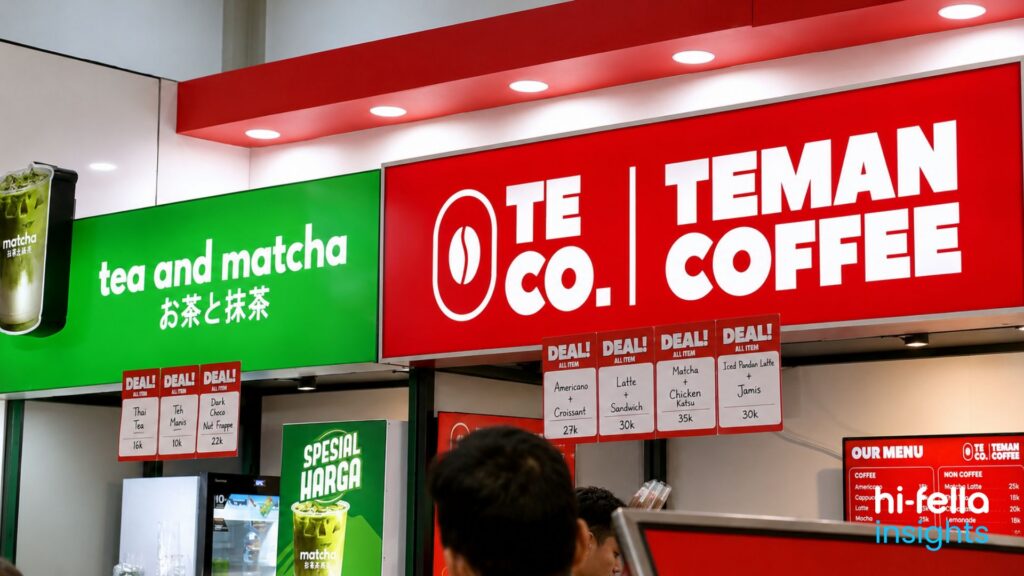
Competitor research should go beyond collecting company names.
Study each competitor’s:
- Target customers
- Product range
- Pricing
- Positioning
- Distribution
- Minimum order quantities
- Delivery time
- Customer reviews
- Marketing channels
- Strengths
- Weaknesses
- Certifications
- Payment terms
Competitors can teach founders how customers evaluate products and which market needs remain underserved.
Suppose several furniture manufacturers compete on low prices and high production volume. Customer reviews may reveal complaints about communication, customization, and quality consistency.
A new manufacturer may not need to compete on price. It could focus on moderate-volume hospitality projects that require structured communication, material traceability, and custom design support.
The opportunity often exists in the gap between what competitors offer and what a specific customer group values.
Why Would Customers Switch?
A new business must provide a strong reason for customers to leave their current supplier, product, or process.
Switching can create risk for the customer. They may need to test a new product, retrain staff, update internal systems, negotiate a contract, or explain the decision to management.
A small improvement may not be enough.
Research should identify:
- What customers dislike about the current solution
- Which problem would justify switching
- How difficult switching would be
- Which proof customers would need
- Which risks they are concerned about
- Which incentives could reduce hesitation
A restaurant may not switch packaging suppliers only to save 3% on price. It may switch when the new supplier offers more reliable delivery, better print quality, and lower minimum orders.
The business should create enough value to overcome the customer’s switching cost.
Which Product Features Actually Matter?
Founders often give equal importance to every product feature. Customers rarely do.
Some features directly influence purchasing decisions. Others are appreciated but not essential.
Research questions may include:
- Which feature is required?
- Which feature would create additional value?
- Which feature is rarely used?
- Which feature increases willingness to pay?
- Which feature creates unnecessary complexity?
- Which feature is expected as a basic standard?
A software company may believe customers want advanced reporting tools. Interviews may reveal that users care more about simple setup, reliable integrations, and faster customer support.
A food exporter may focus heavily on packaging design while buyers care more about product consistency, documentation, shelf life, and supply reliability.
Product development becomes more efficient when founders prioritize features connected to real purchasing behavior.
What Price Will Customers Accept?
Pricing research should examine more than the number customers say they would pay.
Customers may answer politely during interviews but behave differently when presented with a real offer.
Stronger pricing tests include:
- Sending actual quotations
- Offering paid pilots
- Presenting several packages
- Requesting deposits
- Taking pre-orders
- Testing different minimum orders
- Comparing one-time and recurring pricing
- Offering standard and premium options
The founder should understand:
- The current price customers pay
- The budget approval level
- The value created by the solution
- The cost of alternative options
- The customer’s expected return
- The effect of payment terms
- The gross margin available at each price
Consider a business charging $1,000 for a service that saves a client $10,000 per year. The price may be attractive even when competitors charge less, especially when the business can prove the result.
Pricing should be connected to customer value and business economics.
Who Makes the Purchasing Decision?

The person using a product is not always the person approving the purchase.
A B2B transaction may involve:
- End user
- Department manager
- Procurement
- Finance
- Legal
- Technical evaluator
- Company owner
- Senior executive
Each person may have different concerns.
A warehouse manager may care about usability. Procurement may focus on price and supplier reliability. Finance may evaluate payment terms. Legal may review contracts. Senior management may consider return on investment.
Market research should identify:
- Who experiences the problem
- Who searches for solutions
- Who compares suppliers
- Who approves the budget
- Who can reject the purchase
- Who signs the contract
Understanding the decision process helps the company create more relevant content, sales materials, and communication.
How Long Is the Sales Cycle?
A positive response does not always lead to a quick sale.
A consumer product may be purchased within minutes. A corporate software contract, export transaction, or industrial order may require several months.
The founder should investigate:
- How many meetings are usually required
- Which documents customers request
- How long budget approval takes
- When contracts are renewed
- When purchasing cycles begin
- How product testing works
- Which internal departments are involved
- What commonly delays the decision
A long sales cycle affects cash flow and customer acquisition cost.
A company may generate many interested leads but still need enough working capital to survive until contracts close.
The sales cycle should be reflected in revenue forecasts, hiring plans, and marketing expectations.
Where Do Customers Prefer to Buy?
Distribution should match customer behavior.
Possible channels include:
- Company websites
- Marketplaces
- Retail stores
- Distributors
- Agents
- Social commerce
- Trade exhibitions
- Direct sales
- Mobile applications
- B2B platforms
Each channel has advantages and costs.
Direct selling gives the business more control over pricing and customer data. Distributors can provide faster market access but require margin sharing. Marketplaces offer visibility but increase price comparison. Retail stores provide physical access but create inventory and placement costs.
The founder should study where customers already purchase similar products and how much support they need before buying.
How Do Customers Discover New Suppliers or Brands?
Understanding discovery behavior helps determine where marketing resources should go.
Customers may discover businesses through:
- Search engines
- Social media
- Referrals
- Industry communities
- Trade exhibitions
- Online marketplaces
- Business directories
- Sales outreach
- Influencers
- Retailers
- Professional associations
A local consumer brand may benefit from social media and marketplace visibility. A B2B mineral supplier may gain more value from industry directories, trade events, direct outreach, and professional networks.
The best channel is not the most popular one. It is the channel where qualified customers actively research solutions.
What Proof Do Customers Need Before Buying?
Customers rarely trust a new business immediately.
They may request proof through:
- Product samples
- Certifications
- Customer testimonials
- Case studies
- Factory videos
- Trial periods
- Product demonstrations
- Laboratory reports
- References
- Site visits
- Legal documents
- Quality guarantees
The type of proof depends on the risk of the purchase.
A customer buying a low-cost consumer product may rely on reviews. An international buyer ordering a full container may request company documents, samples, production evidence, inspection reports, and export experience.
Market research should identify what makes customers feel confident enough to continue.
Which Standards and Regulations Apply?
Compliance can determine if a product is legally allowed to enter a market.
Potential requirements may include:
- Business licenses
- Product registration
- Food safety certification
- Halal certification
- Environmental rules
- Packaging labels
- Export documentation
- Data protection
- Consumer safety
- Industry standards
- Import permits
- Product testing
A cosmetic product that sells successfully in one country may require different registration in another.
A furniture exporter may need legal wood documentation. A food supplier may need health certificates, laboratory tests, or traceability records.
Founders should understand the cost, time, and operational requirements of compliance before making large investments.
Can the Supply Chain Support the Business?
Strong demand is not enough if the business cannot deliver reliably.
Research should cover:
- Material availability
- Supplier capacity
- Minimum order quantities
- Production lead time
- Quality consistency
- Transportation
- Storage
- Seasonal supply
- Import dependence
- Backup suppliers
- Payment terms
- Currency exposure
Suppose a natural skincare company plans to use a rare botanical ingredient. The product may attract customers, but the business becomes vulnerable if the ingredient is available only during a short harvest season.
A company can reduce risk through alternative suppliers, inventory planning, long-term contracts, or product design changes.
Market research should evaluate both customer demand and supply capability.
What Could Make the Business Difficult to Scale?
A business may work well with ten customers but become difficult to manage with one hundred.
Potential scaling limits include:
- Manual processes
- Limited production capacity
- Founder dependency
- Skilled labor shortages
- Inventory requirements
- Quality control
- Customer support workload
- Logistics complexity
- Regulatory differences
- Long payment periods
A custom furniture business may attract strong demand but struggle when every order requires a completely different design, material, and production process.
The company may need standardized options, modular designs, clearer customization limits, or a higher price for complex projects.
Understanding scaling problems early helps the founder design a stronger operating model.
What Would Encourage Repeat Purchases?
Customer retention can significantly improve profitability.
Repeat customers require less education, may cost less to acquire, and often provide referrals.
Research should explore:
- How frequently customers need the product
- Why customers stop buying
- Which service issues reduce loyalty
- Which complementary products they need
- How reordering can become easier
- Which benefits encourage long-term relationships
A packaging supplier can improve retention by tracking customer inventory cycles and sending reorder reminders before stock runs low.
A coffee brand may introduce a subscription. A service company may offer ongoing support after the initial project.
Repeat purchase potential should influence the founder’s target market, pricing, and Customer Lifetime Value estimates.
How Sensitive Is Demand to Price?
Some markets are highly price-sensitive. Others prioritize reliability, convenience, quality, or risk reduction.
Founders can study price sensitivity by asking:
- Why did customers choose their current provider?
- Would they switch for a lower price?
- Which problems justify paying more?
- Which product parts can be simplified?
- What happens when competitors discount?
- How does price affect perceived quality?
A business selling commodity products may face stronger price pressure because buyers can compare suppliers easily.
A specialized supplier with certifications, reliable logistics, and technical expertise may have more pricing power.
The company needs to know if customers see its offer as interchangeable or meaningfully different.
Which External Trends Could Change the Market?
Market conditions can change because of:
- Technology
- Regulation
- Demographics
- Environmental concerns
- Consumer preferences
- Economic cycles
- International trade rules
- Currency changes
- Supply disruptions
- New competitors
A business dependent on one export market may be affected by tariff changes or currency movements.
A packaging business may benefit from plastic restrictions but also face new requirements for material certification.
Research should identify trends that create opportunity and trends that create risk.
The goal is not to predict every future event. It is to understand which assumptions may change and how the business could respond.
A Realistic Market-Research Case

Consider a founder planning to launch a sourcing platform for sustainable home products from Indonesia.
The initial idea is broad. The founder plans to connect global buyers with suppliers of furniture, home décor, tableware, textiles, and handicrafts.
Early interviews reveal that different buyers have different needs.
Large retailers want high production capacity, strict compliance, competitive prices, and long payment terms. Small online stores want low minimum orders and easy product selection. Interior designers want customization, samples, and project-based support.
The founder discovers that boutique hotels and eco-resorts have a particularly strong problem. They want distinctive natural products but struggle to identify reliable manufacturers, coordinate custom designs, and manage production remotely.
Further research shows that these buyers:
- Place moderate-value orders
- Care about sustainability documentation
- Need custom product combinations
- Prefer project support
- Often reorder for new properties
- Attend hospitality and design events
- Work with interior consultants
The founder adjusts the first business model.
Instead of launching a large marketplace, the company begins with a curated sourcing service for boutique hospitality projects.
The initial service includes:
- Verified supplier selection
- Product catalogue preparation
- Sample coordination
- Quotation comparison
- Material documentation
- Production updates
- Export support
A small paid pilot produces three hotel projects. Two customers place repeat orders, and one introduces the company to an interior design firm.
The research did not simply confirm the original idea. It helped the founder find a narrower and more profitable target market.
That is the real value of market research.
How Many People Should a Founder Interview?
There is no fixed number that guarantees accurate research.
A founder can begin with 15 to 30 conversations in one specific customer segment. The objective is to identify repeated patterns, not reach a statistically perfect conclusion.
More interviews may be required when:
- Customer groups are very different
- Purchasing decisions are complex
- The product is expensive
- The market covers several countries
- Regulations vary by region
- Early responses remain inconsistent
Stop treating interviews as the only research method once the same patterns appear repeatedly. The next step should involve stronger tests such as quotations, samples, deposits, landing pages, pre-orders, and paid pilots.
Customer behavior provides stronger evidence than customer opinions.
A Market-Research Interview Checklist
| Question | Notes |
| What are you currently trying to achieve? | |
| What makes the process difficult? | |
| How often does the problem occur? | |
| What happens when the problem is not solved? | |
| How do you handle it today? | |
| Which providers or products have you tried? | |
| What do you dislike about current options? | |
| How much do you currently spend? | |
| Who approves the purchase? | |
| What usually triggers the decision? | |
| Which features are essential? | |
| Which proof would you need from a new supplier? | |
| What would make you switch providers? | |
| How long does the purchasing process take? | |
| How frequently would you buy again? | |
| Which price range would require management approval? | |
| Where do you search for new suppliers? | |
| What would make the offer feel too risky? | |
| Which industry changes are affecting your decisions? | |
| What have I not asked that would be important? |
Turn Research Into Business Decisions
Market research is useful only when it changes what the business does.
The findings may affect:
- Target customer
- Product features
- Pricing
- Positioning
- Distribution
- Sales process
- Marketing channels
- Supplier selection
- Payment terms
- Customer support
- Launch timing
- Market entry strategy
A founder may discover that the original product is suitable, but the target market is wrong. Another may learn that customers need a service rather than software. A third may find strong demand but weak margins.
Changing direction after research is not failure. It is evidence that the research prevented a more expensive mistake.
Join Hi-Fella and Build Your Global Business Network
Strong market research often requires direct access to buyers, suppliers, manufacturers, distributors, and industry professionals.
Hi-Fella helps businesses explore international opportunities, compare partner capabilities, understand market requirements, and build relationships across industries and countries.
Direct conversations with potential business partners can reveal product specifications, pricing expectations, supplier requirements, purchasing behavior, and market gaps that may not appear in general reports.
Join Hi-Fella to find trusted business partners and grow your network across the global business community.